The market focus is too broad
Teams pursue too many segments, problems or buyer types, spreading effort without building a clear position.
Commercial Advisory
When growth slows, pipeline weakens or execution becomes inconsistent, the visible number is rarely the whole problem. We help leaders find what is producing the result and change the parts of the commercial system that will actually move it.
Start a conversation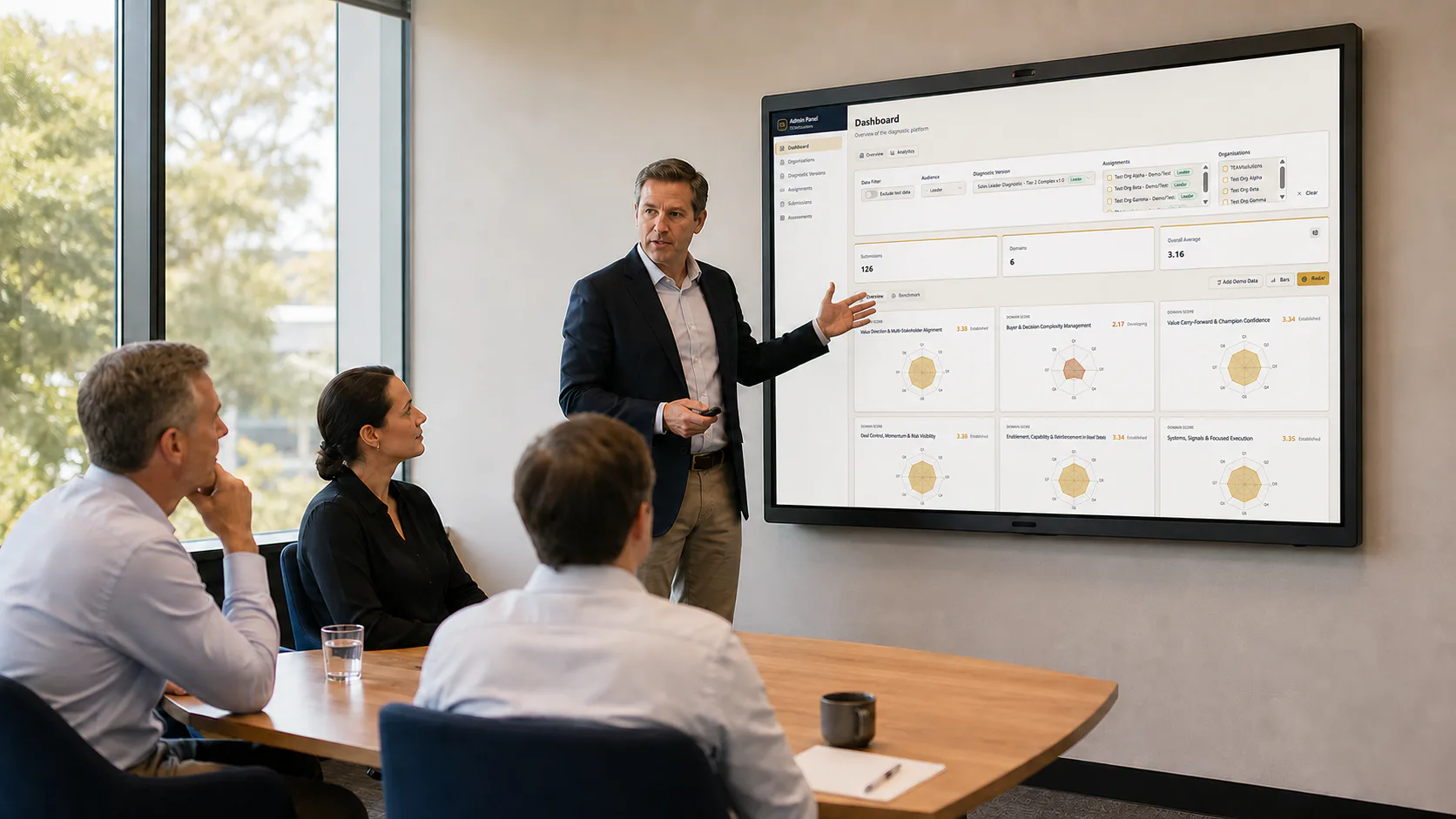
A new script, platform or training program will not fix a constraint it was never designed to address. We look across the commercial system before recommending the intervention.
Teams pursue too many segments, problems or buyer types, spreading effort without building a clear position.
The offer makes sense inside the business but does not give customers a confident reason to change, choose or act.
Marketing, sales, delivery and leadership frame the customer problem differently, creating friction before the buyer sees it.
Targets, territories, roles, incentives and review rhythms push people toward behaviour that contradicts the plan.
Pipeline stages create reporting confidence without showing whether the customer is moving toward a decision.
A platform is asked to repair unclear decisions, weak management or inconsistent practice. The system needs attention first.
The work may begin with diagnostics, leadership interviews, customer evidence, pipeline analysis or a live commercial problem. The route depends on what is known and where confidence is missing.
There is no fixed package. Two organisations can share the same headline problem and need very different levels of depth, structure and support.
Run the Commercial Effectiveness Diagnostic, and the focused instruments where needed, to score the constraint across market focus, value, buyers, qualification, capability, operating model and enablement, before recommending the intervention.
Clarify where to compete, which customer problems matter and what the organisation will stop pursuing.
Turn internal product language into a credible decision case for the people who must support the change.
Align roles, process, management rhythm, measures and incentives with the commercial result required.
Understand the buying group, decision risk and competing views around a change.
Translate the decision into working practices, coaching, tools and measures that survive daily pressure.
What you leave with
A first conversation should establish what is happening, what has been tried and whether diagnosis, advisory, deal work or capability building is the sensible next move.